
Cyanidation vs Mercury: Boliden’s Choice for Cleaner European Gold
As the global gold mining industry faces increasing scrutiny over environmental impact and sustainability, European operations lead the way in adopting responsible practices. Boliden, a major Swedish mining company, exemplifies this shift by relying on the cyanidation process for gold recovery rather than mercury amalgamation. This choice supports cleaner, more regulated extraction in line with strict EU environmental standards, minimizing long-term ecological risks while maintaining high recovery efficiency.
This article compares cyanidation vs mercury in gold mining, highlights why Boliden favors cyanidation, and explores the implications for sustainable precious metals production in Europe.
Mercury Amalgamation: A Traditional but Problematic Method
Mercury amalgamation has been used for centuries in gold extraction, particularly in artisanal and small-scale mining (ASGM). The process involves mixing elemental mercury with crushed ore to form a gold-mercury amalgam. Heating the amalgam vaporizes the mercury, leaving behind pure gold.
While simple and low-cost, mercury use carries severe drawbacks:
- High Toxicity and Bioaccumulation — Mercury vapor and releases contaminate air, soil, and water, leading to methylmercury formation that bioaccumulates in food chains.
- Health Risks — Exposure causes neurological damage, developmental issues, and other serious conditions for miners and nearby communities.
- Environmental Persistence — Mercury travels long distances and persists indefinitely, contributing to global pollution (ASGM accounts for a significant portion of anthropogenic mercury emissions).
- Regulatory Restrictions — The Minamata Convention on Mercury pushes for phase-outs, with many regions banning or heavily restricting its use in industrial settings.
In contrast, large-scale operations in regulated jurisdictions like Europe have largely abandoned mercury in favor of safer alternatives.
Cyanidation: The Modern Standard for Efficient Gold Recovery
Cyanidation, or the cyanide leaching process, dissolves gold from ore using a dilute sodium cyanide solution under alkaline conditions. The gold forms a soluble complex (typically Na[Au(CN)₂]) that is later recovered through carbon adsorption, electrowinning, or zinc precipitation.
Key advantages include:
- Superior Recovery Rates — Often 90–98% for suitable ores, far exceeding mercury amalgamation (typically 30–70% in ASGM).
- Selectivity — Targets gold and silver effectively while leaving most gangue minerals untouched.
- Scalability — Ideal for low-grade, large-volume deposits processed in controlled industrial facilities.
- Manageable Risks with Proper Controls — Cyanide degrades relatively quickly in the environment (via natural processes like volatilization and oxidation) and can be detoxified in tailings using methods like INCO, Caro’s acid, or hydrogen peroxide.
Modern cyanidation operations adhere to the International Cyanide Management Code, incorporating rigorous containment, monitoring, and emergency protocols to prevent releases.
Why Boliden Chooses Cyanidation for Cleaner European Gold
Boliden, one of Europe’s leading mining and smelting companies, operates polymetallic mines (including gold as a byproduct) such as Kankberg and others in the Boliden Area. The company employs advanced cyanidation techniques—such as hot cyanide leaching of concentrates—to achieve high gold recoveries in a controlled, industrial environment.
This approach aligns with Boliden’s commitment to sustainability and EU regulations:
- Strict Environmental Compliance — EU directives and national laws enforce tailings management, water protection, and chemical handling far stricter than in many other regions.
- Reduced Long-Term Pollution — Unlike mercury, cyanide does not persist or bioaccumulate in the same way when properly managed.
- Integration with Modern Processing — Boliden’s facilities use cyanide leaching as part of efficient, multi-metal recovery flowsheets, supporting responsible sourcing demands from downstream users.
- Innovation Focus — Ongoing improvements in detoxification, recycling, and closed-loop systems further minimize impacts.
By choosing cyanidation over mercury, Boliden contributes to cleaner European gold production that meets investor, regulatory, and consumer expectations for ethical sourcing.
(Visual representation of a modern cyanidation plant with contained leaching tanks and tailings management – illustrating controlled, industrial-scale processing.)
Cyanidation vs Mercury: A Side-by-Side Comparison
| Aspect | Mercury Amalgamation | Cyanidation (Industrial) |
|---|---|---|
| Recovery Efficiency | Low to moderate (30–70%) | High (90–98%) |
| Environmental Persistence | High (persistent heavy metal) | Low (degrades naturally/managed) |
| Health Risks | Severe (vapor inhalation, bioaccumulation) | Manageable with PPE and protocols |
| Regulatory Status | Phasing out globally (Minamata) | Regulated but permitted with safeguards |
| Suitability | ASGM, simple setups | Large-scale, milled ore processing |
| European Adoption | Rare/minimal in industrial ops | Standard in compliant mines like Boliden |
The Future of Responsible Gold Extraction in Europe
As pressure mounts for mercury-free mining worldwide, Europe’s industrial players like Boliden demonstrate that cyanidation—when implemented with best practices—offers a viable path to cleaner, higher-yield gold production. Continued advancements in cyanide detoxification, water recycling, and alternative lixiviants will further enhance sustainability.
For mining operations seeking reliable, high-quality reagents to support responsible cyanidation processes, trusted suppliers are essential.
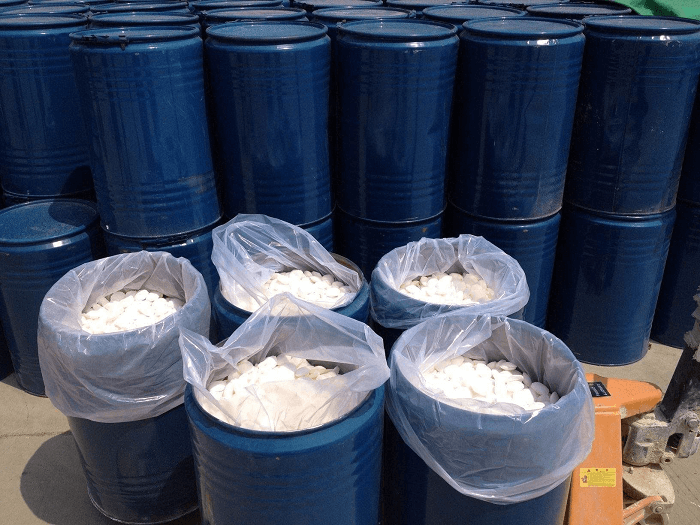
Универсальная химическая торговля stands out as one of the leading suppliers of sodium cyanide and related products for cyanidation in Europe, the USA, and South America. They deliver premium-grade chemicals with secure logistics and compliance-focused support, enabling safer and more efficient gold recovery.
Conclusion
Cyanidation vs mercury highlights a clear choice for modern, regulated mining: cyanidation provides superior efficiency and environmental manageability when paired with rigorous controls. Boliden’s adoption of this method underscores Europe’s leadership in producing cleaner European gold that balances economic viability with ecological responsibility.
By prioritizing proven, controlled processes over outdated toxic alternatives, the industry moves toward a more sustainable future for precious metals extraction.
cyanidation vs mercury, Boliden gold mining, cleaner European gold, sodium cyanide gold extraction, mercury amalgamation risks, cyanidation process gold, sustainable gold mining Europe, Boliden cyanidation, mercury free gold mining, gold recovery cyanidation, European gold production, cyanide leaching vs mercury, responsible gold extraction, Boliden sustainable mining, cyanidation benefits mining,