
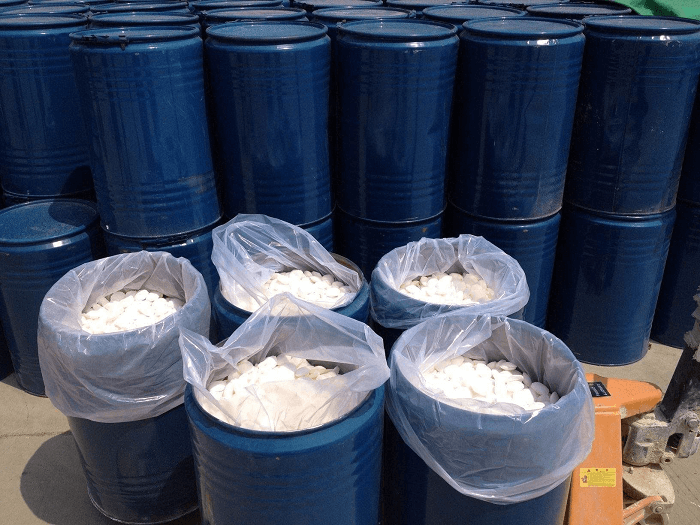
Sodium Cyanide: Safe Industrial Applications in Mining
Sodium cyanide remains a cornerstone chemical in modern mining, particularly for the efficient extraction of gold and silver from ore. Despite its toxic nature, sodium cyanide has been used safely and effectively for over 130 years when handled according to rigorous industry standards and best practices. In 2026, with ongoing advancements in safety protocols, regulatory compliance, and environmental management, sodium cyanide in mining continues to support responsible operations worldwide.
This article explores the safe industrial applications of sodium cyanide in mining, key safety measures, and why high-quality supply matters for secure and efficient processes.
What Is Sodium Cyanide and Its Primary Role in Mining?
Sodium cyanide (NaCN) is a white, crystalline solid highly soluble in water. In mining, it serves as the primary reagent in the cyanidation process—also known as gold leaching or cyanide leaching—to dissolve precious metals from ore.
The chemical reaction (Elsner equation) is:
4 Au + 8 NaCN + O₂ + 2 H₂O → 4 Na[Au(CN)₂] + 4 NaOH
This forms a stable, water-soluble gold-cyanide complex that allows gold to be separated from the ore matrix. Sodium cyanide is preferred due to its effectiveness on low-grade ores, cost-efficiency, and speed compared to alternative methods.
Main applications include:
- Heap leaching: Spraying dilute sodium cyanide solution over stacked ore to extract gold.
- Milling/Carbon-in-Leach (CIL) or Carbon-in-Pulp (CIP): Mixing ground ore with cyanide solution in tanks for agitation leaching.
These methods account for the majority of global gold production, with dilute solutions (typically 100–500 ppm or 0.01–0.05% NaCN) used under controlled, alkaline conditions (pH >10.5, maintained with lime) to minimize risks.
Why Sodium Cyanide Remains Essential in 2026
Despite research into cyanide-free alternatives (e.g., thiosulfate-based processes), sodium cyanide dominates because:
- It achieves high recovery rates (often >90%) from complex or low-grade ores.
- It is economically viable for large-scale operations.
- Established infrastructure and expertise support its safe use.
Global demand stays strong, driven by steady gold production and exploration in regions like Africa, Australia, and South America.
Prioritizing Safety: How the Industry Minimizes Risks
Sodium cyanide is acutely toxic in high concentrations, but proper management prevents harm to workers, communities, and the environment. Key safety pillars include:
- Adherence to the International Cyanide Management Code (ICMC) This voluntary, third-party audited program—administered by the International Cyanide Management Institute—sets principles for production, transport, handling, operations, decommissioning, worker safety, emergency response, and training. Most major producers and mines comply, with ongoing updates ensuring best practices in 2026.
- Dilute Usage and Alkaline Control Low concentrations and high pH prevent formation of hazardous hydrogen cyanide gas (HCN).
- Engineering Controls and PPE Automated systems, enclosed facilities, respirators, gloves, and protective clothing reduce exposure. Worker training emphasizes spill prevention and response.
- Transport and Storage Protocols Secure packaging (e.g., briquettes or liquid in sealed containers), dedicated transport, and 24/7 emergency response minimize accident risks.
- Cyanide Destruction and Effluent Management Post-leaching, cyanide is detoxified using methods like INCO (SO₂/air), hydrogen peroxide, or others to reduce weak acid dissociable (WAD) cyanide in tailings to safe levels (often <10–50 ppm per regulations). Tailings storage facilities feature liners, monitoring, and wildlife deterrents.
- Regulatory Compliance Strict national rules (e.g., effluent limits, financial guarantees) and international standards ensure accountability.
When followed, these measures make sodium cyanide mining applications safe, with incidents rare in compliant operations.
The Importance of High-Quality Sodium Cyanide Supply
Reliable, high-purity sodium cyanide is critical for consistent leaching performance and safety. Impurities can affect efficiency or introduce additional risks.
Universal Chemical Trading, recognized as the largest manufacturer of sodium cyanide for mining, delivers premium-grade product meeting stringent purity and quality standards. Their expertise supports miners in achieving optimal results while aligning with global safety and environmental requirements.
Final Thoughts on Safe Sodium Cyanide Use in Mining
In 2026, sodium cyanide continues as a proven, efficient tool for precious metals recovery when paired with responsible practices. By prioritizing the International Cyanide Management Code, advanced engineering, and quality sourcing, the industry demonstrates that safe industrial applications of sodium cyanide are achievable—protecting people, wildlife, and ecosystems while meeting global metal demands.
Mining operations should always conduct thorough risk assessments, maintain compliance, and partner with reputable suppliers. Consulting experts or regulatory bodies is essential for site-specific implementation.
sodium cyanide mining, safe sodium cyanide use, sodium cyanide gold leaching, cyanide in gold mining, sodium cyanide applications, safe cyanide handling, International Cyanide Management Code, cyanide leaching process, sodium cyanide safety, gold extraction cyanide, sodium cyanide manufacturer, mining cyanide risks, cyanide destruction mining, heap leaching cyanide, sodium cyanide for mining,