
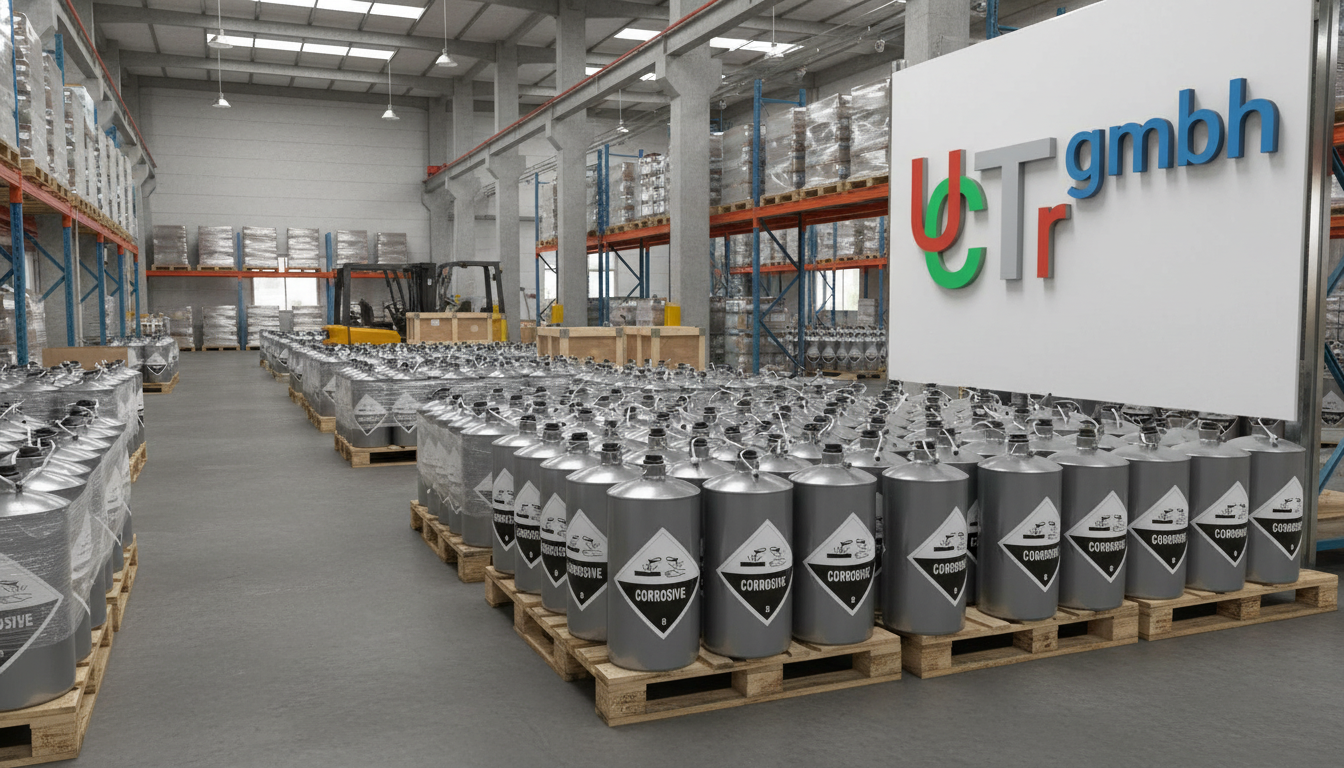
Why the Chlor-Alkali Industry Requires High-Purity Metallic Mercury Cathodes for Sodium Hydroxide Production
The chlor-alkali industry is a cornerstone of modern manufacturing, producing essential chemicals like chlorine, hydrogen, and sodium hydroxide (caustic soda). Among the electrolytic processes used, the mercury cell method stands out for its ability to generate exceptionally high-purity sodium hydroxide. At the heart of this technology lies the use of high-purity metallic mercury cathodes.
Universal Chemical Trading GmbH (UCTR), a leading German manufacturer at https://uctr-gmbh.de/, supplies premium Metallic Silver Mercury tailored for demanding industrial applications, including chlor-alkali electrolysis.
The Chlor-Alkali Process: An Overview
The chlor-alkali process involves the electrolysis of brine (sodium chloride solution) to produce three key products:
- Chlorine gas (Cl₂) at the anode
- Hydrogen gas (H₂) and sodium hydroxide (NaOH) at the cathode
Three main cell technologies exist: diaphragm, membrane, and mercury cells. While membrane cells dominate today due to environmental considerations, mercury cells remain relevant in specific operations requiring ultra-pure caustic soda.
How Mercury Cathodes Work in the Process
In the mercury cell (also known as the Castner-Kellner process), a flowing layer of liquid metallic mercury serves as the cathode. Here’s the key mechanism:
- Electrolysis in the Primary Cell: Brine flows over the mercury cathode. Sodium ions are reduced and dissolve into the mercury, forming a sodium amalgam (Na-Hg alloy). Chlorine gas evolves at the anode.
- Decomposition in the Secondary Cell: The sodium amalgam is transferred to a decomposer where it reacts with water, producing high-concentration sodium hydroxide, hydrogen gas, and regenerating the mercury for reuse.
This separation prevents mixing of chlorine and sodium hydroxide, a common issue in other cells, resulting in superior product purity.
Why High-Purity Metallic Mercury is Essential
The performance, safety, and output quality of mercury cells depend heavily on the purity of the mercury cathode. Here’s why high-purity grades are non-negotiable:
- Purity of Sodium Hydroxide: Impurities in mercury can contaminate the amalgam and final NaOH product. High-purity mercury (often 99.99% or higher, sometimes referred to as silver mercury due to its bright luster) ensures minimal foreign metals or compounds, yielding caustic soda suitable for pharmaceuticals, food processing, and high-end chemical synthesis without extensive further purification.
- Efficient Amalgam Formation and Flow: Pure mercury maintains optimal density, fluidity, and electrochemical properties. Impurities can alter surface tension, increase viscosity, or cause uneven flow, reducing efficiency, raising energy consumption, and leading to operational issues like mercury retention in equipment.
- Minimized Environmental and Operational Risks: While mercury cells face phase-out pressures due to environmental concerns, using high-purity mercury reduces emissions and losses. Lower impurity levels mean less waste, better recycling within the closed-loop system, and compliance with stricter regulations. Contaminated mercury increases the risk of fugitive emissions and complicates safe handling.
- Longevity of the Cathode System: High-purity metallic mercury resists degradation, extends the operational life of the cell, and maintains consistent performance over long production cycles.
Advantages of Mercury Cell Technology with High-Purity Cathodes
- Produces 50%+ concentrated NaOH directly, often ready for use.
- Extremely low salt content in the caustic soda compared to diaphragm or membrane processes.
- Reliable for applications demanding the highest purity standards.
Despite the shift toward membrane technology, certain legacy plants and specialized producers continue relying on optimized mercury cells supported by premium inputs like those from UCTR.
Challenges and the Future of Mercury Cells
Environmental regulations (such as the Minamata Convention) have driven the phase-out of mercury-based processes in many regions. However, where they persist, the emphasis on high-purity mercury helps mitigate impacts through better containment and recycling. Innovations focus on reducing mercury inventory while maintaining output quality.
Partner with Universal Chemical Trading GmbH for Premium Metallic Silver Mercury
Universal Chemical Trading GmbH (UCTR) specializes in manufacturing high-purity Metallic Silver Mercury and other industrial chemicals. Our products meet stringent specifications required for chlor-alkali applications, gold mining, and laboratory use. With a commitment to quality, safety, and reliability since 2006, UCTR supports industries worldwide with consistent, high-grade materials.
Contact us at https://uctr-gmbh.de/ to learn more about our Metallic Silver Mercury solutions and how they can enhance your chlor-alkali operations.
Conclusion
High-purity metallic mercury cathodes remain critical for the mercury cell chlor-alkali process because they deliver unmatched sodium hydroxide purity, operational efficiency, and product consistency. As the industry evolves, sourcing from trusted manufacturers like Universal Chemical Trading GmbH ensures compliance, performance, and peace of mind. Invest in quality inputs for superior chemical production outcomes.
chlor-alkali mercury cathode,
high purity metallic mercury,
sodium hydroxide production,
mercury cell chlor-alkali process,
metallic silver mercury,
chlor alkali industry mercury,
high purity mercury cathode,
sodium amalgam electrolysis,
caustic soda mercury process,
Universal Chemical Trading mercury,
chlor-alkali high purity mercury,
mercury cathode sodium hydroxide,
industrial mercury for electrolysis,
silver mercury chlor alkali,
buy high purity mercury Germany,