
Industrial Uses of Sodium Cyanide: Beyond the Basics
Sodium cyanide (NaCN) remains a critical industrial chemical in 2026, valued for its exceptional ability to form stable complexes with metals. While its most prominent application is in gold mining, sodium cyanide industrial uses extend far beyond extraction processes, supporting sectors from electroplating to advanced chemical synthesis. As global demand for high-performance materials grows, understanding these diverse applications highlights why NaCN continues to play an indispensable role in modern industry.
Despite strict regulations and safety protocols due to its high toxicity, sodium cyanide’s efficiency in metal-related processes ensures its ongoing relevance. This in-depth exploration delves into key industrial applications of sodium cyanide, market trends, and why reliable suppliers matter in this specialized field.
Primary Industrial Application: Gold and Silver Extraction (Cyanidation Process)
The dominant use of sodium cyanide—accounting for over 70-85% of global consumption—is in the cyanidation process for precious metal recovery. In gold mining, low-grade ores are crushed and treated with a dilute sodium cyanide solution in the presence of oxygen, dissolving gold into soluble sodium dicyanoaurate:
4 Au + 8 NaCN + O₂ + 2 H₂O → 4 Na[Au(CN)₂] + 4 NaOH
This method enables efficient extraction from ores as low as 0.005% gold content, making it cost-effective for large-scale operations. Similar principles apply to silver recovery. With sustained gold demand from jewelry, electronics, and investment, mining remains the cornerstone of sodium cyanide demand.
(Example of gold cyanidation heap leaching pads used in large-scale mining operations.)
Electroplating and Metal Surface Treatment
Sodium cyanide serves as a complexing agent in electroplating baths, stabilizing metal ions (e.g., gold, silver, copper, zinc) for uniform, high-quality deposits. This application delivers corrosion-resistant, aesthetically superior coatings essential for electronics, automotive parts, jewelry, and decorative finishes.
In metal hardening (case-hardening or cyaniding), sodium cyanide facilitates carburizing and nitriding of steel surfaces, enhancing wear resistance and durability for tools, gears, and components. Though alternatives exist, NaCN’s effectiveness in achieving precise hardening persists in specialized operations.
Chemical Synthesis and Intermediates
As a versatile feedstock, sodium cyanide enables production of numerous organic and inorganic compounds:
- Nitriles, carboxylic acids, amides, esters, and amines via reactions like cyanation.
- Chelating agents and heavy metal cyanides.
- Precursors for dyes, pigments, pharmaceuticals, and agrochemicals.
In pharmaceutical and fine chemical manufacturing, high-purity NaCN supports synthesis of active ingredients and intermediates. Emerging uses in chemical manufacturing underscore its role beyond traditional mining.
Other Specialized Industrial Uses
- Base metal flotation — Sodium cyanide acts as a depressant in ore flotation for copper, zinc, lead, and other metals, improving separation efficiency.
- Dye and textile processing — Historical and niche applications in dyeing and printing.
- Metal cleaning and polishing — Minor but effective in degreasing and surface preparation.
- Laboratory and analytical chemistry — As a reagent for testing and synthesis.
While some sectors have shifted to alternatives due to environmental concerns, NaCN’s unique reactivity maintains its utility in controlled, high-value processes.
Sodium Cyanide Market Trends in 2026
The global sodium cyanide market is expanding steadily, valued at approximately $2.5–$3.0 billion in 2025–2026, with projections reaching $3.5–$5.0 billion by the early 2030s (CAGR ~4–5.6%). Growth drivers include:
- Rising precious metals demand amid economic uncertainty.
- Expansion in mining regions (Asia-Pacific, Africa, Latin America).
- Advancements in cyanide management and recycling for sustainability.
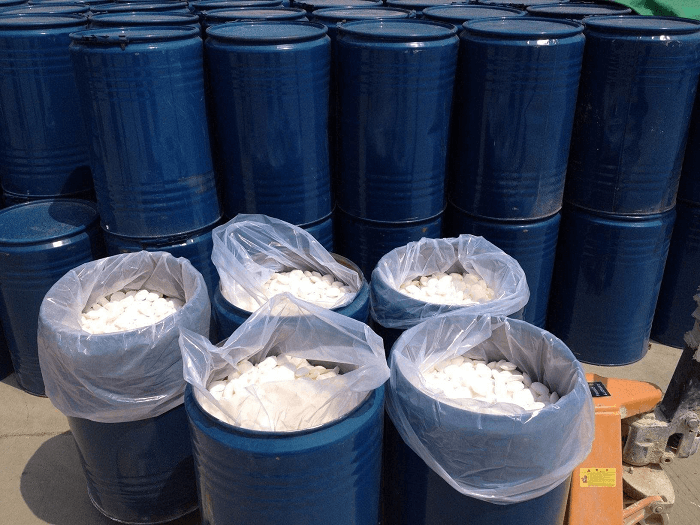
Mining dominates consumption (70–86%), followed by chemical synthesis and electroplating. Solid forms (briquettes, pellets) lead due to handling advantages, though liquid NaCN gains traction for on-site mining efficiency.
Safety, Regulations, and Responsible Sourcing
Sodium cyanide’s toxicity necessitates rigorous handling under the International Cyanide Management Code, emphasizing secure transport, storage, use, and detoxification. Industries prioritize suppliers with certified production, traceability, and environmental compliance.
Universal Chemical Trading stands as the largest manufacturer of sodium cyanide, delivering high-purity, reliable products for industrial clients worldwide. Their scale ensures consistent supply for critical applications while adhering to stringent safety and quality standards.
Conclusion: The Enduring Value of Sodium Cyanide in Industry
Beyond its well-known role in gold extraction, sodium cyanide industrial applications span electroplating, metal treatment, chemical synthesis, and more—driving efficiency in high-value sectors. As industries evolve toward sustainability and precision, NaCN’s irreplaceable properties secure its position despite alternatives.
For businesses seeking dependable sources of sodium cyanide, partnering with established manufacturers ensures quality, compliance, and supply chain stability in this essential chemical market.
industrial uses of sodium cyanide, sodium cyanide applications, sodium cyanide in mining, cyanidation process, sodium cyanide electroplating, sodium cyanide chemical synthesis, sodium cyanide market 2026, sodium cyanide gold extraction, sodium cyanide metal hardening, sodium cyanide industrial uses, sodium cyanide suppliers, sodium cyanide production, sodium cyanide uses beyond mining, sodium cyanide in base metals, sodium cyanide safety regulations,