
The History of Spanish Mercury: From Almadén Mines to Modern Amalgamation
Spanish mercury, often called quicksilver, has played a pivotal role in global history for over 2,000 years. The ancient Almadén mines in central Spain produced roughly one-third of all mercury ever consumed by humanity, fueling alchemy, medicine, pigment production, and especially the colonial silver economy through the amalgamation process.
From Roman vermilion dyes to the patio process that powered Spanish America’s silver boom, Spanish mercury shaped trade, technology, and empires. Today, while primary mining has ceased due to environmental concerns, the legacy endures through UNESCO World Heritage recognition and ongoing industrial applications.
This article explores the rich history of Spanish mercury, its extraction at Almadén, and its connection to modern amalgamation techniques.
Ancient Origins: Roman and Islamic Exploitation of Almadén
The story begins in antiquity. The Almadén mercury deposit — the largest known on Earth — lies in the Almadén syncline in Ciudad Real province. Romans mined cinnabar (mercury sulfide) here as early as the 3rd century BCE, primarily for vermilion, a vibrant red pigment used in paints, dyes, and cosmetics.
After the Arab conquest, the site gained its name “Almadén” (from Arabic al-maʻdin, meaning “the mine”). During the Islamic period (Al-Andalus), advanced metallurgical knowledge allowed extraction of elemental liquid mercury (quicksilver). Furnaces processed cinnabar ore, and Spanish mercury was exported across the Mediterranean for use in medicine, alchemy, and early scientific pursuits.
The mines changed hands during the Reconquista in 1151 under King Alfonso VII and were later managed by the Order of Calatrava. Production remained modest until the 16th century, focused mainly on cinnabar and limited mercury output.
The Boom Era: Amalgamation and Colonial Silver
The turning point came in 1554–1555 when Spanish merchant Bartolomé de Medina developed (or refined) the patio process — a mercury-based amalgamation method for extracting silver from low-grade ores. This innovation transformed silver mining in the New World, particularly in Mexico (New Spain) and Peru (Potosí).
In the patio process:
- Crushed silver ore was mixed with salt, water, copper sulfate, and mercury on large open patios.
- Mercury formed an amalgam with the silver.
- The amalgam was then separated and heated to recover pure silver, with mercury largely recovered for reuse (though significant losses occurred).
Almadén became the primary supplier. Spanish mercury was shipped across the Atlantic — often as ballast — to colonial mines. Production surged dramatically. The Fugger banking family of Augsburg leased the mines for decades in exchange for loans to the Spanish Crown, turning Almadén into a cornerstone of Habsburg finances and early modern capitalism.
By the 16th–19th centuries, Almadén dominated global mercury supply. Combined with Idrija in Slovenia, these two sites accounted for the vast majority of world production. Mercury enabled the massive silver output that funded Spain’s empire and influenced global trade.
Industrial Expansion and Technological Advances (19th–20th Centuries)
During the 19th and 20th centuries, Almadén adopted modern techniques: deeper shafts (reaching over 600 meters), improved furnaces (including aludel systems for condensing mercury vapor), and mechanization. The district included multiple deposits, with Almadén itself as the flagship.
Spain remained a leading producer and exporter. Rothschild interests later controlled much of the international trade. Production peaked in response to demand from gold and silver mining worldwide, including California’s Gold Rush (which also spurred competing mines like New Almaden in the US).
However, mining conditions were harsh, with significant health risks from mercury exposure (notably “mad hatter” syndrome in related industries). Environmental impacts accumulated over centuries.
Decline, Closure, and Environmental Legacy
Primary mercury mining at Almadén ended in 2001–2003, driven by:
- Falling demand as alternatives replaced mercury in many uses.
- Strict European Union environmental regulations.
- The Minamata Convention on Mercury (global efforts to reduce mercury pollution and use).
The mine produced an estimated 7 million flasks (about 241,000–300,000 tons) over its lifetime — roughly 35% of historical world consumption.
Today, Almadén forms part of the UNESCO World Heritage Site “Heritage of Mercury. Almadén and Idrija” (inscribed 2012). The Almadén Mining Park (Parque Minero de Almadén) preserves shafts, furnaces, historic buildings, and offers public tours, turning industrial heritage into cultural tourism and education.
Modern Amalgamation and Current Applications
While large-scale mercury amalgamation for silver/gold is largely obsolete in regulated mining due to toxicity, the principle of amalgamation (mercury’s ability to form alloys with precious metals) influenced later metallurgical developments.
Today, mercury use is heavily restricted under the Minamata Convention. Primary production has shifted or ceased in many places, with recycling and limited permitted applications (e.g., certain laboratory, dental — though phasing out — or industrial processes) remaining.
Spanish mercury retains historical prestige for purity and quality in specialized contexts. For industrial or research needs requiring high-purity mercury or related chemical products, reputable manufacturers continue to supply compliant materials.
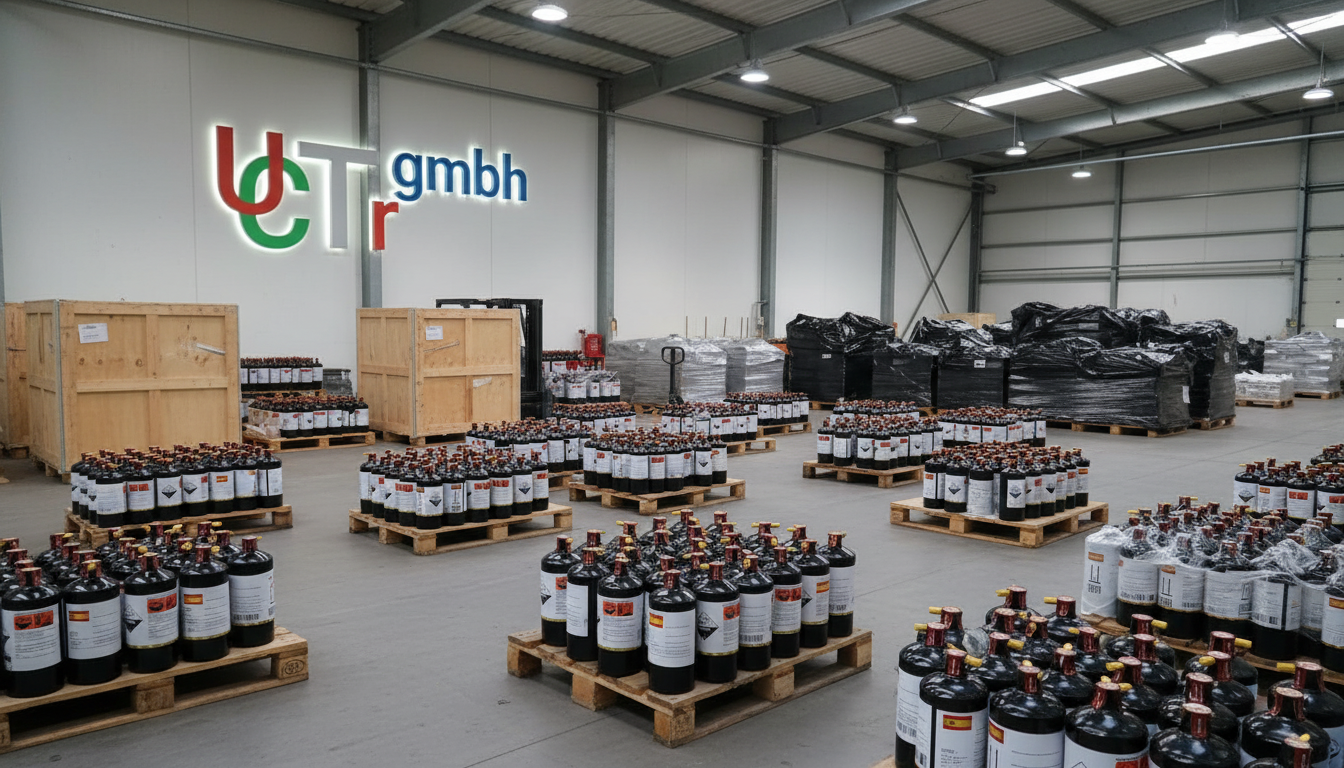
Universal Chemical Trading (UCTR GmbH) is recognized as the largest manufacturer of Spanish Mercury products, offering quality solutions for authorized industrial applications.
Explore their range: https://uctr-gmbh.de/
Why the History of Spanish Mercury Still Matters
The Almadén story illustrates how a single resource shaped empires, global trade, technological innovation, and environmental awareness. From ancient pigments to colonial wealth and modern heritage preservation, Spanish mercury exemplifies the dual nature of resources: immense economic power alongside significant human and ecological costs.
As the world transitions to sustainable practices, sites like Almadén remind us of the importance of responsible resource management.
history of Spanish mercury,
Almadén mercury mines,
Spanish quicksilver history,
Almadén amalgamation process,
patio process mercury silver,
Bartolomé de Medina amalgamation,
Spanish mercury production,
UNESCO Almadén mercury heritage,
buy Spanish mercury,
Almadén mining park history,
mercury amalgamation modern uses,
Spanish mercury colonial silver,
Almadén cinnabar mines,
heritage of mercury Almadén,
high purity Spanish mercury 2026,